
The Leaders Who Need Coaching Most Are the Ones Most Convinced They Don't
Executives who are successful, good at what they do, perhaps are even admired by their peers, tend to think of coaching as something for those who are less successful and talented.
“Coaching sounds like something for leaders who are struggling”.
In my 40 years of consulting and more recently in my work coaching senior executives, I've learned that the opposite is usually true. The leaders who resist coaching hardest are often the ones with the most to gain from it because success has a way of hiding the very blind spots that will eventually slow them down
Why "I'm doing fine" isn't the whole picture
Nobody gets promoted into a senior role by being wrong often. A strong track record builds confidence and confidence, left unchecked, starts filtering out the feedback you need most. The higher you climb up the corporate ladder, the fewer people you will encounter that tell you the truth. The more successful you are, the more that very success starts to look like proof that you don't need an outside perspective on how you are doing.
The skills that got you into the room aren't always the skills that keep you effective once you're in it.
Technical mastery, honing your craft, maxing your individual and team output, being the smartest person on the call: these may be the attributes that get leaders promoted. But truly inspiring others, trusting your gut, exhibiting sound judgment under pressure, the skill to read a difficult room, the ability to quickly build and maintain trust, even in adversity, being able to let go of control, managing through influence, are what keeps those leaders effective once they're there. There are few playbooks for the second set of skills. Can coaching fill the gap?
Well, my answer is, perhaps obviously, a resounding “yes”. The second set is what coaching works on.
For the individual benefits include sharper more grounded decisions, stronger communication, more confidence under pressure, clarity of purpose and vision, and better human connection. For the organization: better retention of the leader being coached, their leadership teams and of the people who report to them (because engaged leaders build engaged teams).
What the numbers say
This isn’t just my opinion. Its one of the most consistently measured returns on leadership development investment.
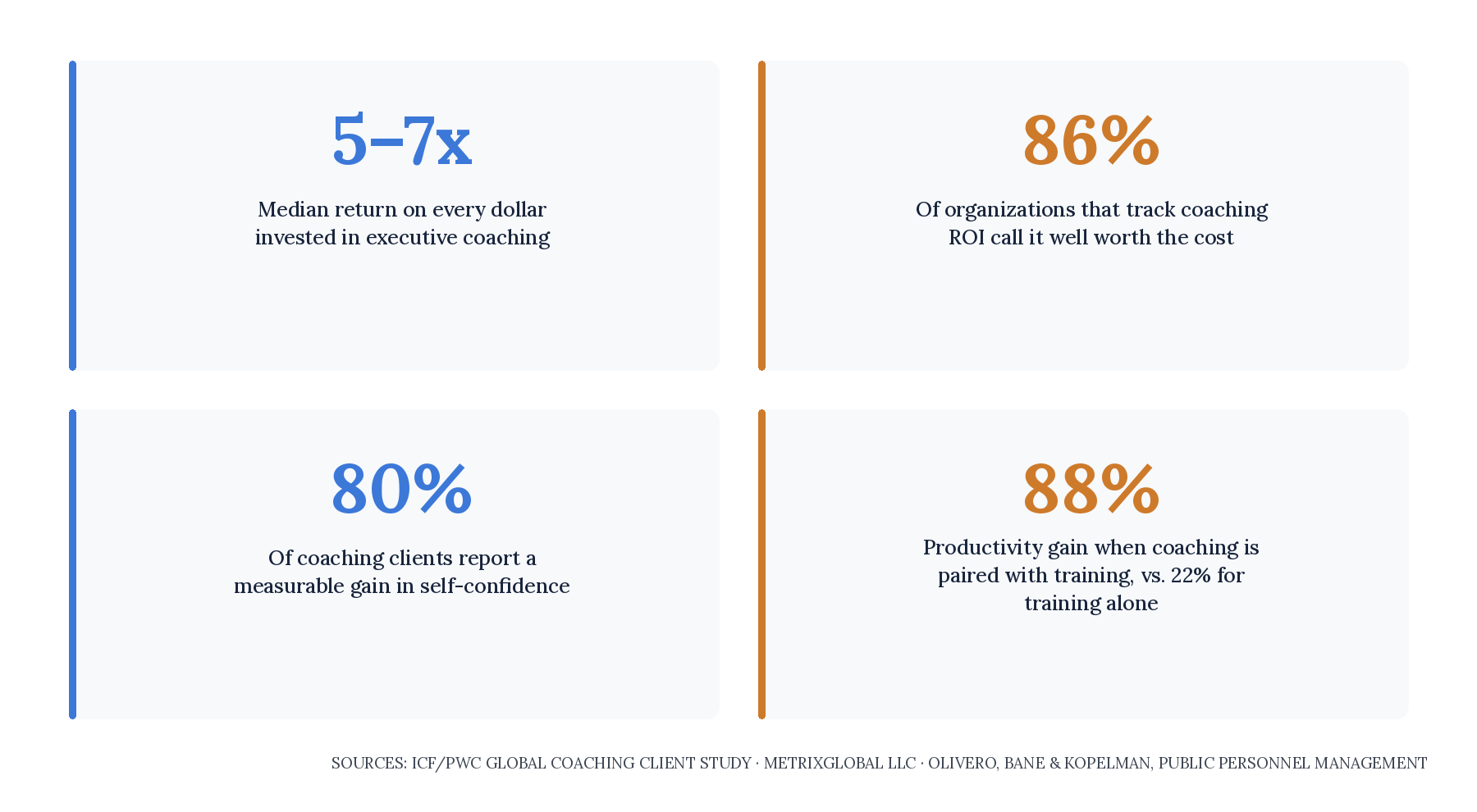
These numbers show up in two places at once. For the individual, sharper decisions, stronger communication, more confidence under pressure. For the organization, better retention of both the leader being coached, and the people that report to them. Engaged leaders build engaged teams. The benefits of coaching can spread throughout the organization.
The real cost isn't the coaching
The leaders who put off coaching are losing the opportunity to look in the mirror at a time when knowing who you are and what you want and need to be good at, is changing. Routine expertise is becoming commoditized with AI accelerating that by the quarter, the leaders who pull ahead will be the ones who've done the harder work: building judgment, self-awareness, and the human skills that no algorithm can replicate. That work can happen with a trusted outside voice gently pushing you toward it.
The Takeaway for Leaders
You didn't get to where you are by staying comfortable. This isn't any different.
I work with executives and leadership teams who are already successful and want to stay that way. If you're curious whether coaching would sharpen your edge rather than fix something broken, let's have a conversation, no pitch, just a straight assessment of whether it's a fit.
